Is Screeding a Floor a Big Job? What Homeowners and Builders Need to Know
Wondering if screeding a floor is a big job? We explain the full process for Somerset and Dorset homeowners and builders, from prep to finish.

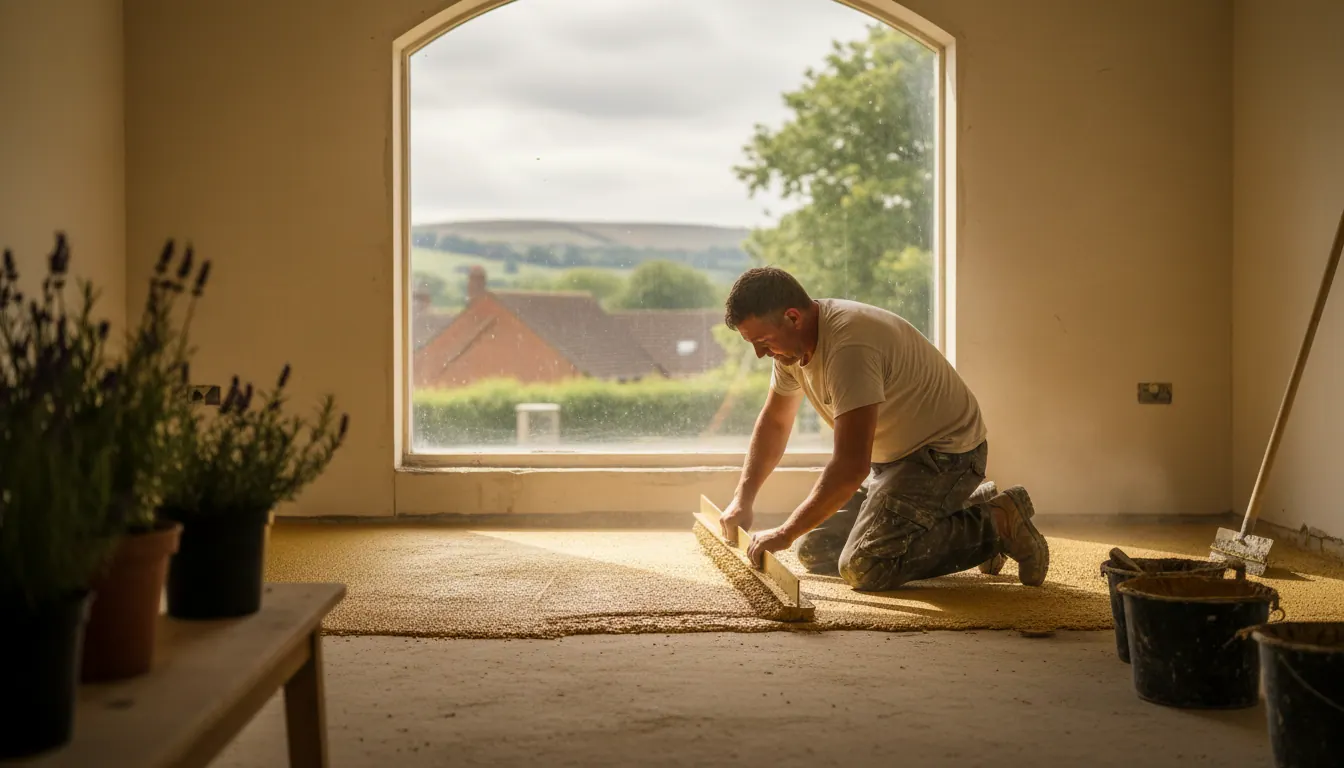
Screeding a floor: bigger than grouting a tile, simpler than you might think
A lot of people come to us unsure what floor screeding actually involves. They know they need it, their builder has mentioned it, or they have pulled up old carpet and found a rough, uneven concrete slab underneath. But they are not sure whether it is a weekend DIY job, a specialist trade, or something in between.
The honest answer: it depends on the floor, the finish you need, and what is going underneath. But for most domestic projects in Somerset and Dorset, including extensions, renovations and new builds, floor screeding is a specialist job that sits at a specific point in your build programme. Get it right and every floor finish that follows goes down cleanly. Get it wrong and problems show up later, under your tiles or your engineered timber, where they are expensive to fix.
Here is what the job actually involves, so you can plan properly.
What floor screeding actually is (and what it is not)
Screed is a layer of material applied over a structural concrete slab or insulation to create a smooth, level surface for your floor finish. It is not the same as the concrete slab itself, and it is not plastering. Plastering is a wall finish; screeding is a floor finish. They are different materials, different skills, and different trades. Plasterers do not typically do floor screeding, and we would not expect a screeder to skim your walls.
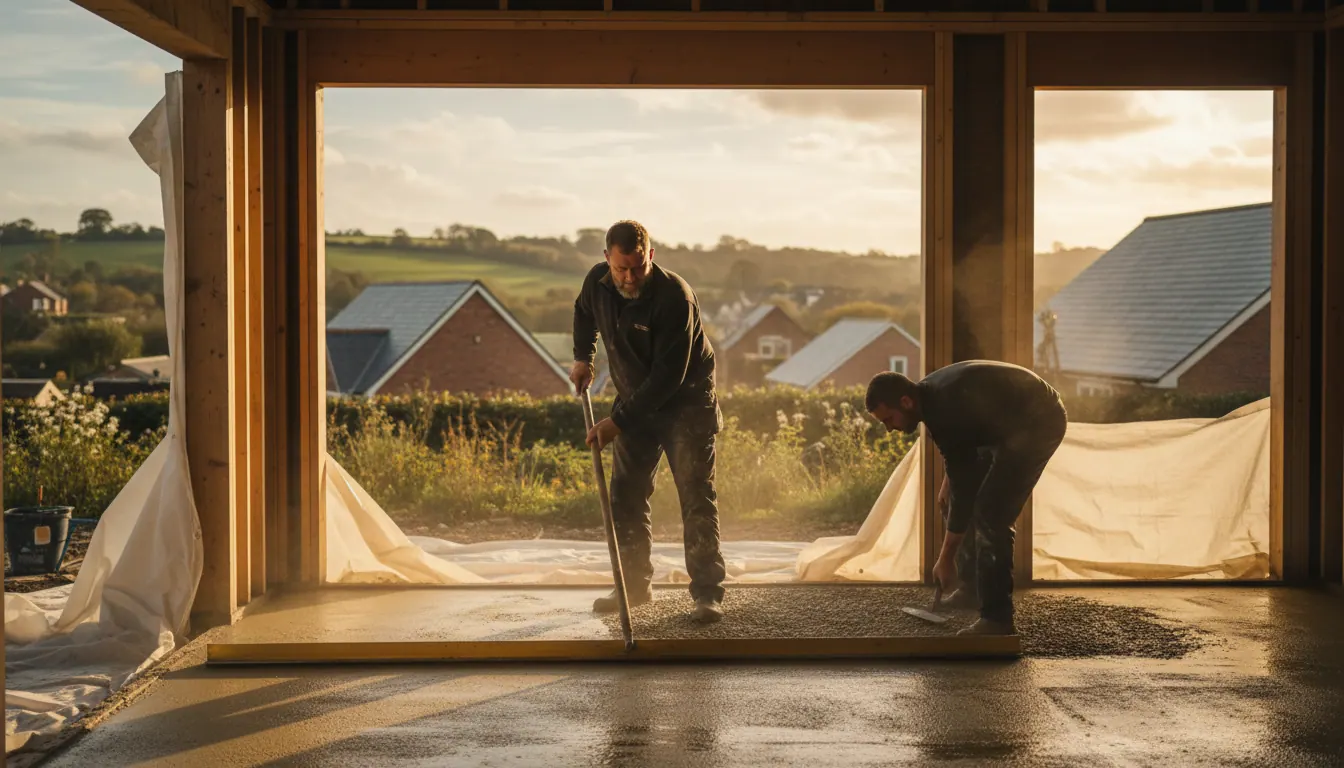
Liquid screed (also called flowing screed or anhydrite screed) is poured rather than trowelled. It is self-levelling, which means it flows into the space, finds its own flat plane, and sets without the labour-intensive hand-finishing that traditional sand and cement screed requires. For most projects we work on across Somerset, Taunton, Yeovil, Weston-super-Mare and Bridgwater, liquid screed is the better option: faster to install, more consistent in depth, and far better suited to underfloor heating systems.
If you want a deeper comparison, our article on Liquid Screed vs Sand and Cement: Which Suits a Somerset Home? covers the differences in practical detail.
What makes a screeding job large or small?
The scale of the job comes down to a few factors:
- Floor area. A single-room extension is a compact pour. A full new build with multiple ground-floor zones is a larger programme.
- Floor preparation. If the slab is already level, clean and ready, preparation is straightforward. If there is existing material to work around, or if insulation and perimeter edging still need laying, that adds time.
- Underfloor heating. If pipes are already installed and pressure-tested, liquid screed goes over them. The pipes need to be inflated or pressurised during the pour to hold their position. This is the heating installer's responsibility, not ours, but it needs to be coordinated.
- Access. Liquid screed arrives by pump. We need reasonable vehicle access to reach the floor. Most residential properties in Somerset and Dorset are straightforward, but it is worth flagging anything unusual when you get in touch.
For a typical home extension in Taunton or Yeovil, the pour itself can be completed in a single day. The floor preparation beforehand and the drying period afterwards are what extend the overall timeline.
What we do, step by step
When you book us, here is what happens:
1. Floor preparation. If the slab is ready, we can go straight to the pour. If not, we can lay the insulation, damp-proof membrane and perimeter edge strip (the thin foam strip around the room's edges that allows the screed to expand and contract without cracking). We do this preparation work ourselves, so you do not need to find a separate contractor for it.
2. The pour. Liquid screed is pumped in and spread to the required depth. It flows around underfloor heating pipes and into corners without manual trowelling. We check levels as we go.
3. The drying period. This is the part most people underestimate. Liquid screed needs time to dry before any floor finish goes down. The exact drying time depends on depth, temperature, ventilation and the type of screed. We will tell you what to expect when we quote the job. You can read more about this in our guide on How Long Until You Can Lay Tiles After Floor Screeding?
4. Handover. Once the screed is sufficiently dry and the surface is suitable for your floor finish, the floor is ready for your tiler, flooring fitter or joiner to take over.
Does screeding fit around the rest of your build?
Yes, but timing matters. Screeding comes after the structural work, first fix (electrics, plumbing, underfloor heating) and insulation. It comes before second fix, tiling, and any floor finish. If you try to screed too early, trades walking across a wet floor can damage it. If you screed too late, you hold up everyone else.
For extension projects in particular, getting the screed scheduled at the right point in the build programme makes a real difference. Our article on Screeding a Home Extension: When It Fits in Your Build Schedule and Why It Matters goes into this in more detail, with guidance on sequencing the screed alongside your other trades.
Does screeding need to happen before tiling?
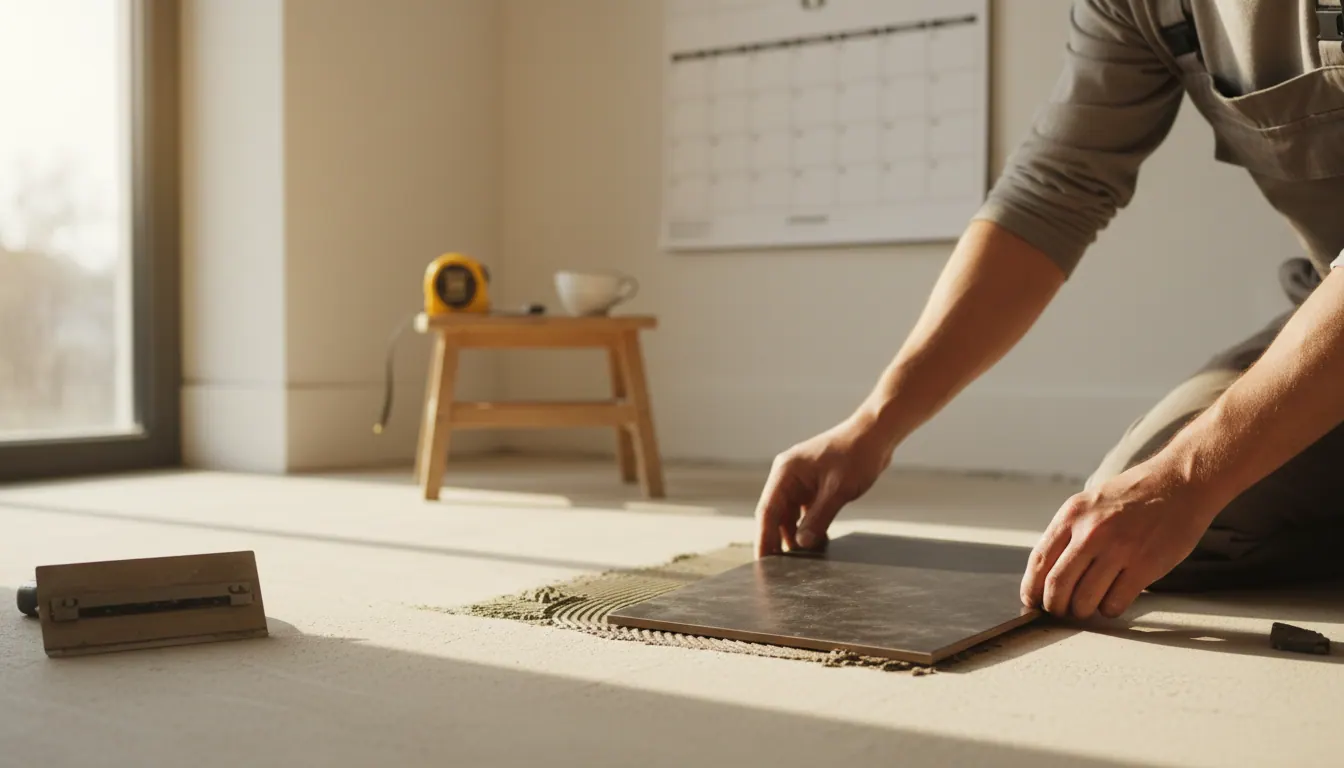
Yes, in most cases. Tiles need a flat, stable base. If your concrete slab is uneven, tiling directly onto it will result in lippage (where tile edges sit at different heights) and cracked grout or tiles over time. A screed layer gives you the flat, consistent surface that a tile adhesive and tiles need to perform properly.
There are situations where a very minor level difference can be addressed with a self-levelling compound rather than a full screed, but for most floors, especially those over underfloor heating or insulation, a proper screed is the right answer.
What a good job looks like
Josh, who had us screed a floor for him, put it simply:
"Really happy with the work. The finish was spot on and you can tell a lot of care and attention went into getting everything right. Turned up when he said he would, worked hard and left everything tidy afterwards. Would definitely recommend to anyone looking for a reliable and professional screeding service."
That is what we aim for on every job: a flat, consistent finish, on time, and with the site left tidy. Screeding is not glamorous work, but it underpins everything that follows. A floor that is out of level or poorly finished will cause problems for years. A floor that is done properly just works.
Is it a job you can DIY?
We get asked this. The honest answer is: liquid screeding is not a DIY trade. The material arrives by pump lorry, it needs to be installed to a precise depth and level, and the floor preparation needs to be correct for the screed to bond and perform properly. Getting any of those things wrong can mean cracking, de-bonding, or an uneven finish that needs remedial work.
Sand and cement screed can be mixed and laid by a competent DIYer on a small area, but it requires significant physical effort, takes longer to dry, and is harder to get truly flat. For anything over underfloor heating, or any floor that matters, a specialist contractor is the right call.
Frequently asked questions
Is screeding necessary before tiling? In most cases, yes. Tiles need a flat, level, stable base. Unless your concrete slab is already perfectly level and in good condition, a screed layer is the right way to achieve that. Over underfloor heating, a screed is essential.
Is screeding the same as plastering? No. Plastering is a wall finish applied by a plasterer. Screeding is a floor finish applied by a screeder. Different materials, different tools, different skills. If someone quotes you for both as if they are interchangeable, that is worth querying.
Do plasterers do floor screeding? Some may offer it, but floor screeding, especially liquid screed, is a specialist trade. Liquid screed requires specific equipment (a pump and hose system) and knowledge of depths, drying conditions and compatibility with underfloor heating. We do only this, and it shows in the finish.
How long does floor screeding take from start to finish? The pour itself on a typical domestic extension or ground floor can be completed in a day. Floor preparation (insulation, membrane, edge strip) may add time beforehand. The drying period afterwards is the longest part of the process and needs to be factored into your build programme. We will give you a clear timeline when we quote.
Ready to get a straight answer on your project?
If you have a floor that needs screeding in Somerset, Dorset, Bridgwater, Taunton, Yeovil or Weston-super-Mare, tell us your floor area and location and we will quote you for free. No obligation, no jargon. Just a clear price for the work.
Get in touch with us and we will take it from there.