Commercial Floor Screeding in Somerset and Dorset: What Contractors and Developers Need to Know
Planning a commercial floor screed in Somerset? We cover what to expect, how the process works, and why liquid screed suits commercial projects.

Commercial floor screeding in Somerset: the practical guide for builders and business owners
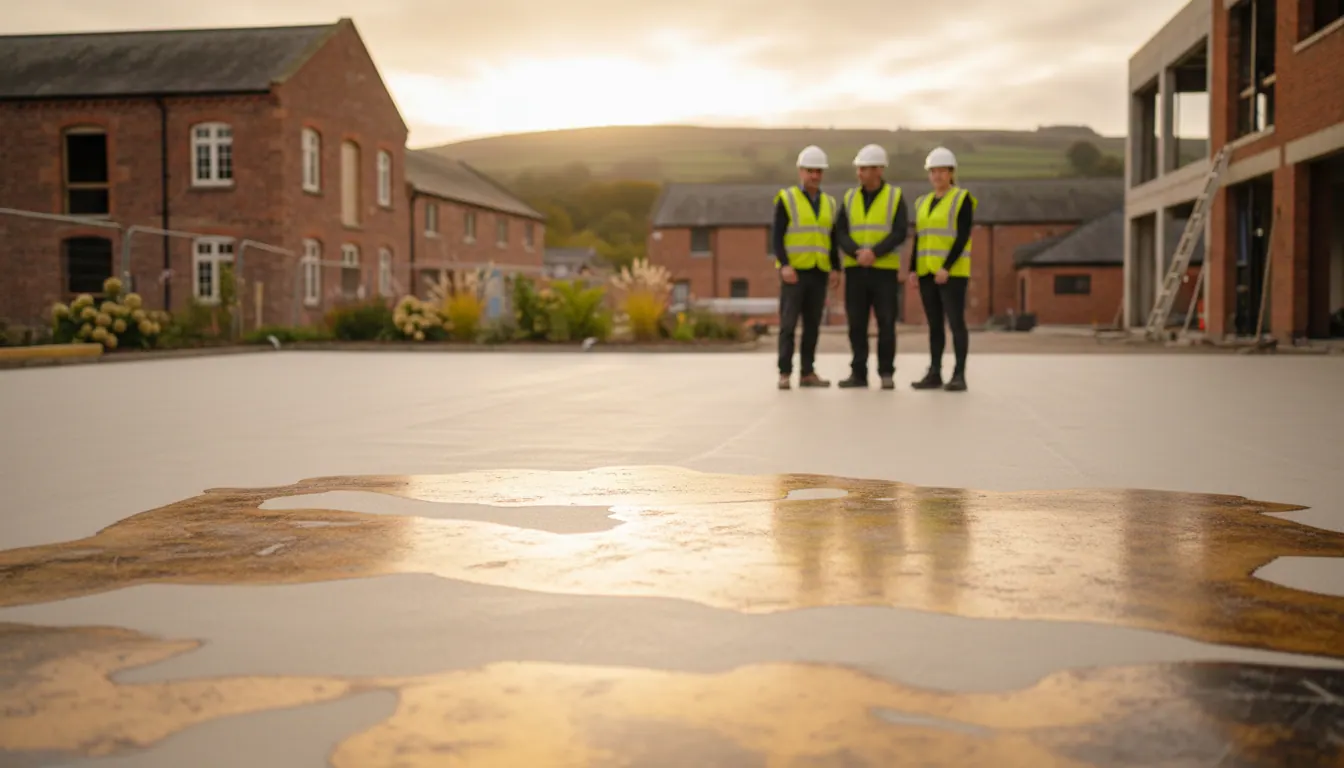
A commercial floor is not the same job as a domestic one. The areas are larger, the programme is tighter, and the cost of delays ripples through every trade that follows. Whether you are fitting out a retail unit in Taunton, building a warehouse in Bridgwater, or finishing a multi-unit development near Yeovil, getting the floor screed right, on time and to the correct level, matters more than almost any other early-stage decision.
We are liquid screed specialists covering Somerset, Dorset and the surrounding areas. This guide explains how commercial floor screeding works, what makes liquid screed the practical choice for larger projects, and what you need to have in place before we arrive.
Why liquid screed is the standard choice for commercial floors
Traditional sand and cement screed has its place, but on commercial floors it comes with real limitations. It is mixed and laid by hand, which means output per day is limited. It is also prone to curling at the edges and cracking across the surface if the mix or the curing is not managed carefully. On a large floor, those risks add up.
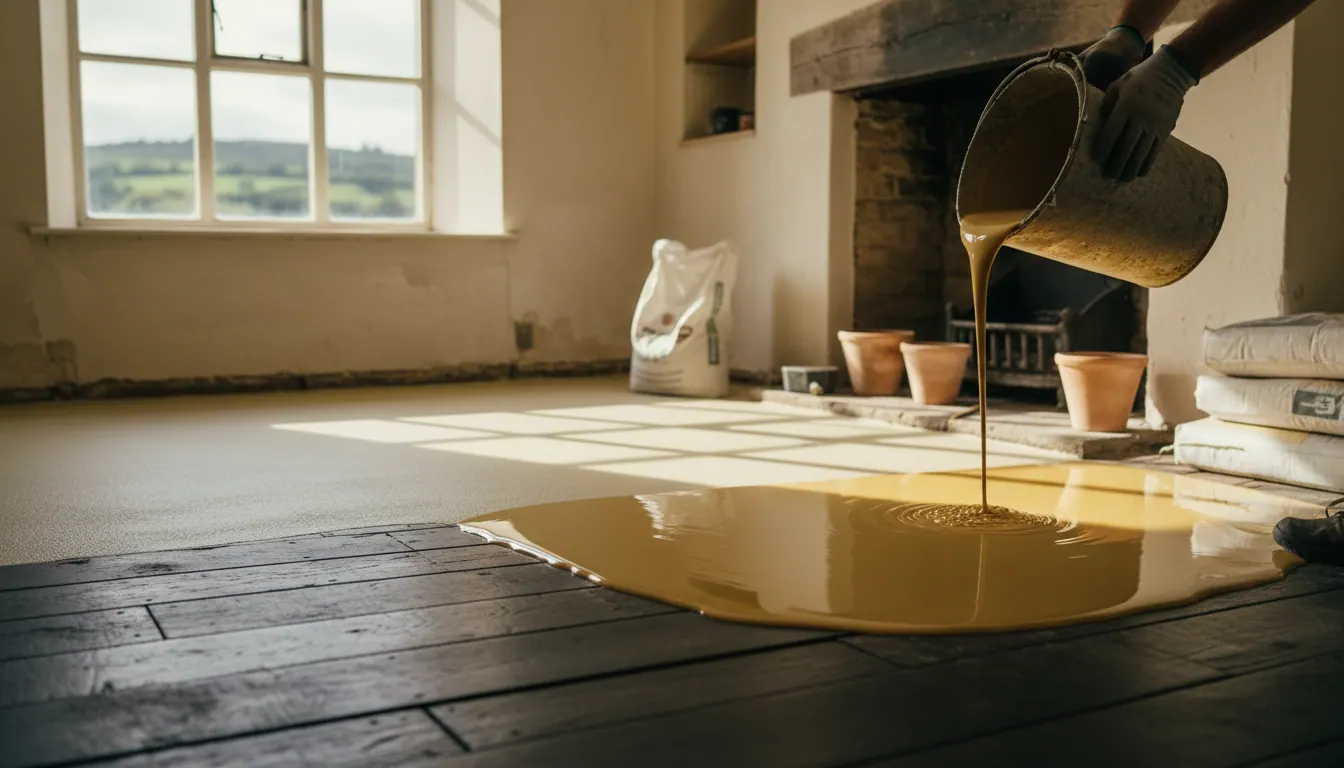
Liquid screed (also called flowing or pumpable screed) is different. It is delivered to site ready-mixed and pumped through a hose directly to the floor. It flows into place under its own weight, self-levels across the slab, and encapsulates underfloor heating pipes fully and without voids. The result is a dense, flat, consistent finish across the whole area.
For commercial projects, the key advantages are:
- Speed. A pump can cover a large floor area in a single day. Trades do not hang around waiting for section after section to be laid.
- Flatness. The self-levelling action produces a consistent surface that floor finishes, whether resin, tiles, vinyl or carpet, can go straight onto once the screed has dried sufficiently.
- Compatibility with underfloor heating. Commercial underfloor heating systems are common in offices, showrooms and new-build units. Liquid screed encapsulates the pipes fully, which improves thermal efficiency across the whole floor.
- Less disruption on site. Pumping is cleaner and quieter than mixing and barrowing. There is less foot traffic through the building, and the job is done faster.
If you are weighing up liquid screed against sand and cement for a specific project, our article Liquid Screed vs Sand and Cement: Which Suits a Somerset Home? covers the comparison in detail. The core principles apply equally to commercial floors.
What commercial floor screeding actually involves
The screeding process on a commercial job follows a clear sequence. Understanding it helps you plan your programme and brief your other trades.
Floor preparation comes first. Before any screed goes down, the substrate (the concrete slab or existing floor beneath) must be clean, sound and free from contamination. Insulation boards are laid across the slab, a damp-proof membrane goes over the top, and perimeter edge strip is fixed around the walls. This edge strip is important: it allows the screed to expand and contract slightly without cracking or bonding to the wall.
We can carry out this preparation work ourselves, which removes the coordination headache of getting another trade in before us. If your groundworker or main contractor has already completed the preparation to the correct specification, we can come straight in and pour.
Underfloor heating pipes are laid and tested before we arrive. We do not install the heating system itself. That is a job for your plumber or heating engineer. What we do is pour the liquid screed over the pipes once they have been pressure-tested and signed off. The screed flows around the pipes completely, leaving no air pockets.
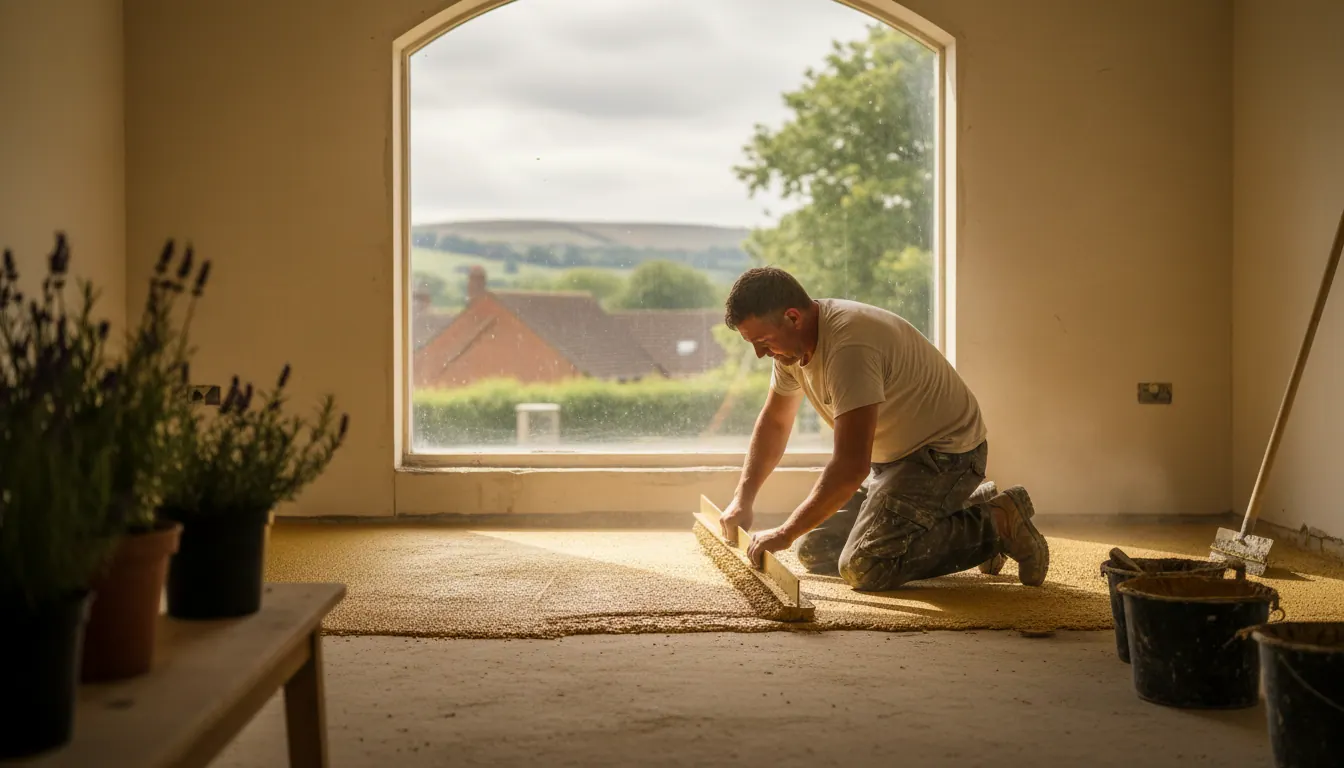
The pour itself is fast. The screed is pumped from the delivery vehicle, through a hose and across the floor. A team member guides the hose and uses a dappling bar (a long tool that agitates the surface) to release any trapped air and encourage the screed to settle level. On large commercial floors, this stage can cover hundreds of square metres in a single session.
After the pour, the floor needs to cure. Liquid screed needs time to dry before floor finishes can be applied. The floor must be kept free from foot traffic, draughts and direct sunlight during the early curing period. We will advise you on the specifics for your project when we quote.
Getting the programme right on a commercial build
The single biggest source of delay on commercial screeding jobs is other trades not being ready. We see it regularly: the insulation is not down, the heating pipes have not been tested, or the building is not watertight. None of those are screeding problems, but they all push the pour back, which pushes everything else back.
A few things to have confirmed before you book us:
- The slab is clean, level enough for screeding, and fully cured
- Insulation and membrane are down, or we are booked to do that preparation
- Underfloor heating pipes (if applicable) are laid, pressure-tested and documented
- The building is weathertight: rain, frost and draughts affect the cure
- Access for the pump vehicle is clear
On this last point, access matters more on commercial sites than people expect. The pump vehicle needs to park close enough to run the hose to the floor. If you have an unusual access situation, tell us when you enquire and we will talk through how to manage it.
What our customers say
We take care on every job, commercial or domestic. Josh, one of our customers, put it simply:
"Really happy with the work. The finish was spot on and you can tell a lot of care and attention went into getting everything right. Turned up when he said he would, worked hard and left everything tidy afterwards. Would definitely recommend to anyone looking for a reliable and professional screeding service."
That attention to finish matters just as much on a 500 square metre commercial floor as it does on a house extension. A flat, consistent screed makes every subsequent trade's job easier.
Commercial screeding across Somerset and Dorset
We work on commercial projects throughout Somerset and Dorset, including in and around Bridgwater, Taunton, Yeovil and Weston-super-Mare. The types of project we cover include:
- Retail and commercial fit-outs
- Offices and light industrial units
- New-build residential developments (multiple plots)
- Care homes and healthcare facilities
- Agricultural and rural commercial buildings
Builders and developers are welcome to contact us directly for trade enquiries. We are used to working within a main contractor's programme and understanding what a project manager needs from a specialist subcontractor.
Frequently asked questions
Is screeding a floor a big job?
It depends on the floor area and what preparation is needed. On a commercial project, the preparation stage, laying insulation, membrane and edge strip, can take a day or more depending on the size. The pour itself, once everything is ready, is often surprisingly quick. Liquid screed can cover large areas in a single session. The job that takes the most time is the drying period afterwards, which is built into the programme rather than being active work. We explain the full picture in our article Is Screeding a Floor a Big Job? What Homeowners and Builders Need to Know.
Do plasterers do floor screeding?
Some do, and some general builders will also offer it as a service. But floor screeding, particularly liquid screed on commercial floors, is a specialist job. The mix, the pump equipment, the preparation requirements and the curing conditions all need to be managed correctly. A specialist contractor will have the right equipment, understand the tolerances required for different floor finishes, and take responsibility for the result. It is worth using someone whose core work is screeding rather than someone who does it occasionally alongside other trades.
Can I screed a floor myself?
On a domestic floor, some homeowners do attempt a sand and cement screed themselves, with mixed results. On a commercial floor, self-laying is not realistic. Liquid screed requires a pump and a delivery vehicle, and the volumes involved on commercial projects mean the logistics alone are beyond a self-managed pour. Getting the levels wrong on a large floor is an expensive mistake. This is a job to hand to a specialist.
What should I check before booking a commercial screeding contractor in Somerset?
A few practical questions are worth asking. Can they carry out the floor preparation as well as the pour, or do you need to arrange that separately? Do they have experience with underfloor heating screeds? What access do they need for the pump vehicle? How do they advise on curing conditions and when floor finishes can go down? And can they work within a main contractor's programme? We are happy to answer all of these before you commit to anything.
Get a quote for your commercial project
If you have a commercial floor in Somerset or Dorset that needs screeding, get in touch with us with your floor area, location and a brief description of the project. We quote each job individually once we understand what is involved, and there is no charge for the quotation. Builders and trade enquiries are very welcome.